After a rideshare accident in Florida, three different insurance policies can end up pointing at each other: your own, the Uber or Lyft driver’s, and any other driver who was involved. If you were hurt as a passenger or a driver in Fort Myers or North Port, the question that matters is simple: whose insurance actually pays you? The answer turns almost entirely on what the rideshare driver’s app was doing at the moment of the crash.
Why a rideshare accident is not a normal car crash
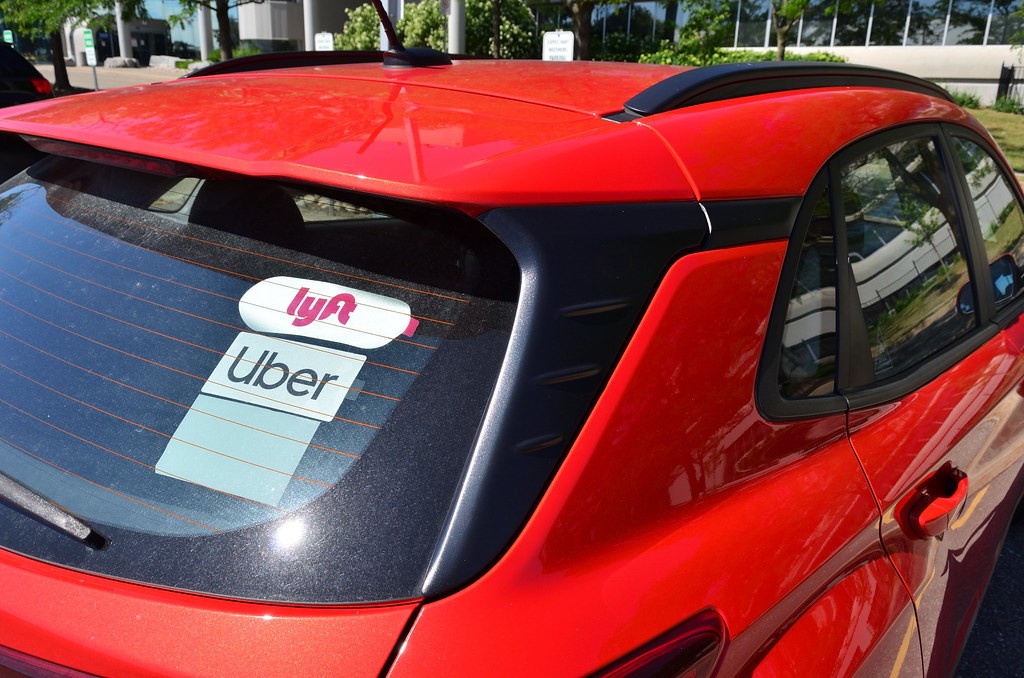
In an ordinary crash you usually deal with two drivers and two policies. A rideshare accident stacks more layers on top: the driver’s personal auto policy, the rideshare company’s commercial policy, your own Florida PIP, and any at-fault third party’s coverage. Uber and Lyft drivers are independent contractors, not employees, so most claims point toward an insurance policy rather than the company itself. That extra structure is why two people in the same crash can get very different answers about who pays.
Whose insurance pays depends on the driver’s app status
Florida ties rideshare coverage to the driver’s status in the app at the moment of the collision. There are three windows, and the coverage in each is very different.
App off: the driver’s personal insurance only
If the driver had the app closed and was not working, it is treated as an ordinary crash. The rideshare policy does not apply at all, and you are looking at the driver’s personal auto insurance and your own coverage.
App on, waiting for a ride: Period 1 contingent coverage
Once the driver is logged on and waiting for a request, a smaller contingent policy applies. Under Florida Statute 627.748, the rideshare company must carry at least $50,000 per person and $100,000 per accident for bodily injury, plus $25,000 for property damage during this waiting window.
On the way to you or carrying a passenger: the $1 million policy
From the moment the driver accepts a ride until the passenger is dropped off, the full commercial policy is live. Uber and Lyft each carry $1,000,000 in liability coverage during this period, plus uninsured and underinsured motorist protection. If you were a passenger, this is the policy that usually covers your injuries.
The table below summarizes who pays in each window:
| Driver’s app status | Whose insurance pays | Coverage available |
|---|---|---|
| App off — not working | Driver’s personal auto policy + your PIP | Personal policy limits only |
| App on, waiting for a ride (Period 1) | Rideshare contingent policy + your PIP | $50,000/person, $100,000/accident bodily injury; $25,000 property damage |
| Ride accepted or passenger aboard (Periods 2–3) | Uber/Lyft commercial policy + your PIP | $1,000,000 liability, plus uninsured/underinsured motorist |
How Florida’s no-fault (PIP) rules fit in
Florida is a no-fault state, so your own personal injury protection comes first, even when you were a passenger in someone else’s Uber. PIP pays 80% of your reasonable medical bills up to $10,000 regardless of who caused the crash, as long as you see a doctor within 14 days. PIP is first, but it is small; for a serious injury it runs out fast, and that is when the rideshare or at-fault driver’s liability coverage takes over. Our explainer on whether Florida is a no-fault state breaks down how PIP works.
What if another driver caused the rideshare accident?
If a third driver ran the light and hit your Uber, that driver’s bodily-injury liability is the primary source of payment, and the rideshare policy often sits behind it. When the at-fault driver has no insurance or too little, the rideshare company’s uninsured/underinsured motorist coverage can step in during an active trip. If you are dealing with a driver who has no coverage, our guide on what to do if you’re hit by an uninsured driver in Florida walks through the options.
Can you sue Uber or Lyft directly in Florida?
Usually not the company itself. Since the drivers are independent contractors, Florida’s transportation network company law and recent appellate rulings generally block claims that try to hold Uber or Lyft vicariously liable for a driver’s negligence. In practice that matters less than it sounds: you are claiming against the $1 million policy the company is required to carry, not its corporate bank account. A lawyer pursues the right policy rather than the brand.
What to do after an Uber or Lyft accident in Fort Myers

A few steps protect your claim while the details are fresh:
- Screenshot the trip and the driver’s status in the app before it disappears.
- Get the rideshare driver’s name and insurance, plus the other driver’s information.
- Report the crash to police and through the Uber or Lyft app.
- See a doctor within 14 days so your PIP applies.
- Talk to an attorney before you accept any settlement offer.
If you want a named attorney on it from the start, our Uber accident and Lyft accident pages explain how we handle these cases.
Hurt in an Uber or Lyft crash in Fort Myers or North Port?
Who pays after a rideshare accident in Florida comes down to the driver’s app status, with your own PIP covering the first layer and the $1 million policy waiting behind it for serious injuries. This is general information, not legal advice, and every crash has its own facts. If you were hurt in an Uber or Lyft crash in Fort Myers or North Port, Kremenchuker Law Group can help — call our Fort Myers office at 239-995-3425 or our North Port office at 941-655-6985. The first conversation is free, you pay only if we win, and we speak English, Russian, Ukrainian, Spanish, and Creole.